
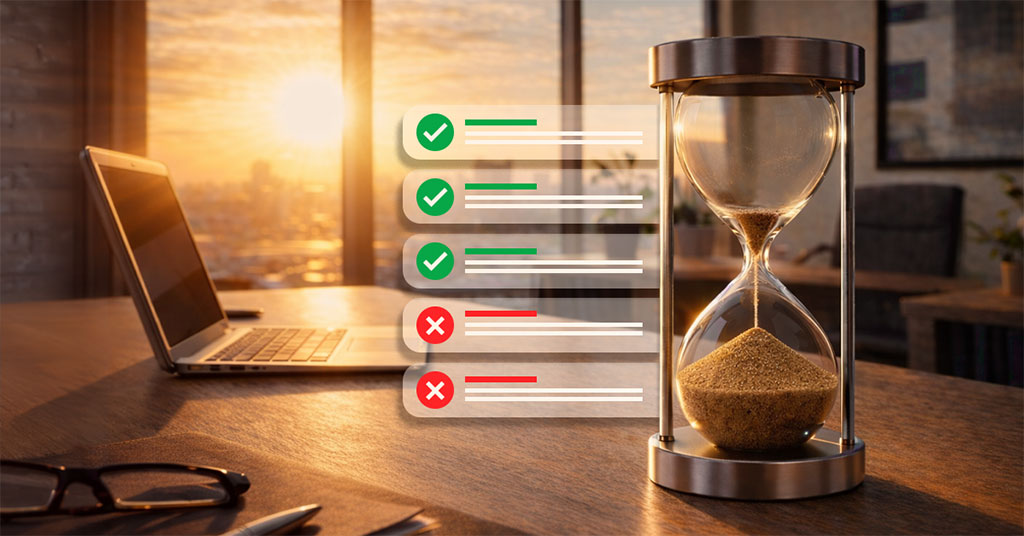
Every year around late June, we get the longest day of the year, more daylight, more usable hours, and at least in theory, more time to get things done.
But most business owners don’t experience it that way.
Even with extra daylight, the day can fill up just as quickly as any other. Meetings run long, unexpected issues pop up, and before you know it, you’re at the end of the day wondering how you ran out of time again.
It raises an uncomfortable question: If even the longest day of the year doesn’t feel like enough, is time really the problem?
In many cases, it may not be.
The day doesn’t fall apart all at once
Very few days start off chaotic.
You typically begin with a clear idea of what needs to be done. You may even have a plan to finally make progress on something that has been sitting on your list for a while. Then something small interrupts you.
An employee can’t log in. The Wi-Fi slows down unexpectedly. A file isn’t where it’s supposed to be, or a system takes longer than expected to respond.
None of these issues may seem major on their own, but each one can force someone on your team to stop what you’re doing and shift your attention.
That shift is often when time starts to slip away.
By the time you get back to your original task, you may have lost momentum, and it can take longer than expected to get back on track. When this happens repeatedly throughout the day, staying focused becomes much harder.
It’s not about having more time. It’s about losing less of it.
Most business owners don’t lose hours at all at once. They lose time in small, constant interruptions: systems that lag, files that aren’t where they should be, and quick issues that pull people off track and take longer than expected to resolve.
Individually, none of it seems significant. But over the course of a day, it can add up. Work slows down, focus gets broken, and simple tasks may take longer than they need to.
You can feel the difference on days when things run smoothly. Work moves with fewer unnecessary stops, your team stays focused, and tasks feel less drawn out.
It doesn’t necessarily feel like you suddenly have more time. It just feels like the day runs more efficiently.
More hours won’t fix an inefficient workflow
If your business is consistently wasting time on small issues, slow systems, and recurring interruptions, adding more hours to the day may not solve the underlying problem.
Working longer days might help in the short term, but it doesn’t always address the root cause. The same is true for adding more people. If the underlying systems are unreliable or unsupported, inefficiencies can continue as your team grows.
At a certain point, it becomes worth asking whether the issue is really capacity, or whether it’s how the business operates day to day.
What can make a difference
Businesses that run smoothly often aren’t just better at managing their time, they’ve taken steps to reduce the interruptions that take time away in the first place.
Systems may be monitored so potential issues can be identified earlier. Recurring problems can be addressed more strategically rather than repeatedly worked around. And when something does go wrong, having a clear support process can help reduce disruption.
That kind of support may not eliminate every issue, but it can help reduce frustration, improve focus, and make it easier for teams to stay productive.
Tired of losing time every day?
If interruptions regularly make it difficult to get through a normal workday, it may be worth taking a closer look at the systems and processes behind them.
Technology should support your business—not constantly pull attention away from it.
We work with businesses to help monitor, maintain, and support their technology so small issues are less likely to become bigger daily disruptions.
The goal isn’t perfect, it’s helping create a more reliable, efficient work environment so your team can stay focused on what matters most.
Call us at 206-414-7441 or book a quick discovery call to see if there may be opportunities to improve how your technology supports your business.